
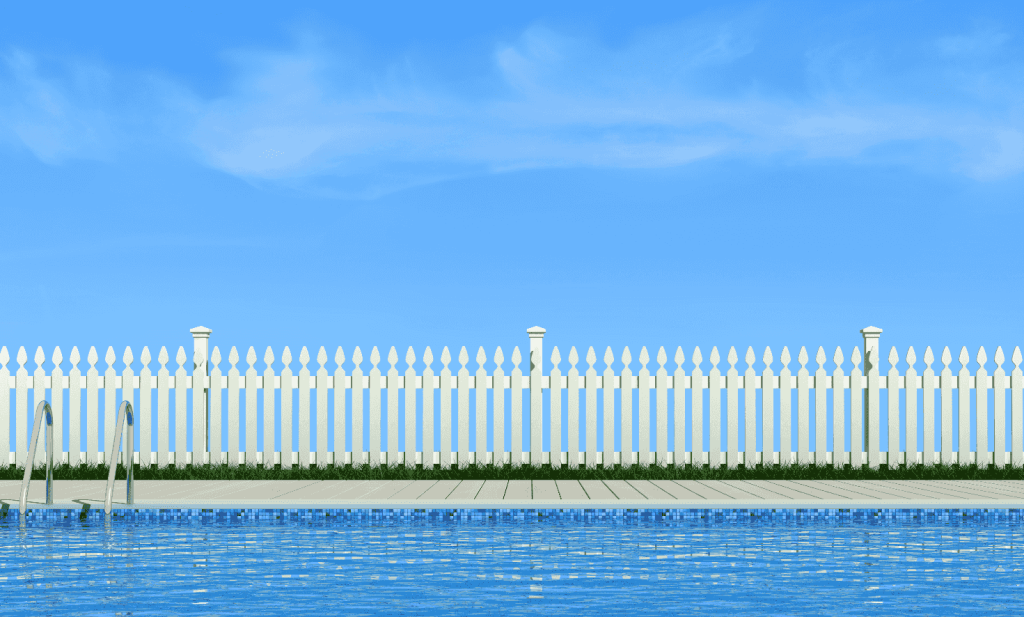
The primary objective of Queensland pool fencing laws is to decrease drowning incidents, mainly among kids. These laws apply to all spas or swimming pools that can hold water deeper than 300 mm, including inflatable or portable types.
Important requirements for pool fencing
Lowest fence height: Your pool fence must stand at least 1200 mm high from the ground on the outside area.
Non-climbable zone: You need a 900 mm clear area on the outside of the fence – no toys, planters, or furniture that kids could climb on.
Self-closing gates: Gates must swing outward from the pool place, be self-closing, and have a latch at least 1500 mm from the ground or a latch to the gate inside at least 150 mm below the top of the gate.
Gap limits: Gaps beneath the fence cannot exceed 100 mm, and vertical areas within the fence should also be 100 mm or less.
Strong materials: Your fence should be built with powerful, weather-resistant materials like glass, metal or treated timber.
Bear in mind, these are the basics – if you have a boundary fence or special property layout, extra rules may apply.
What are the regulations for approval?
Pool registration
All swimming pools in Queensland, including plunge pools, must follow the registration process of QBCC. Failure to register your pool can result in fines. The pool must be included in the official pool safety register before installation starts.
Building approvals
Before installing your plunge pool, you must get building approval from your private certifier or local council. This approval makes sure your pool complies with safety and structural regulations.
Pool fencing and barriers
In Queensland, pools must have compliant barriers to stop unsupervised access by young kids. Pool fences must meet specific strength and height needs, and gates must be self-closing and self-latching. Additionally, any climbable objects or furniture near the fence should be removed to avoid providing access to the pool place.
Warning and CPR signage
All pools in Queensland must display warning and CPR signs, which must be easily visible from the pool area. These signs are important for emergency conditions and are mandatory by law.
Safety certificate
Once your plunge pool is built, you will need a pool safety certificate, mainly if you plan to rent or sell your property. This certificate can be got from a licensed pool safety inspector.
Your duty as a pool owner
Register your pool: Any spa or pool deeper than 300 mm needs to be registered with the Queensland Building and Construction Commission.
Stay in check: if you modify your pool area – like adding landscaping or a deck – double-check that it still meets fencing needs.
Maintain the fence: regularly check for damage, rust, or loose hinges. A broken latch or wobbly panel can compromise safety.
Supervise and educate: While not a legal need, educating guests and family about pool rules is important. We also encourage learning CPR – it can be a lifesaver.
Portable spas and pools: Contrary to famous belief, temporary or smaller pools can still fall under the regulations. If your portable pool meets the 300 mm or deeper threshold, it needs the same compliant fencing as a lasting structure.